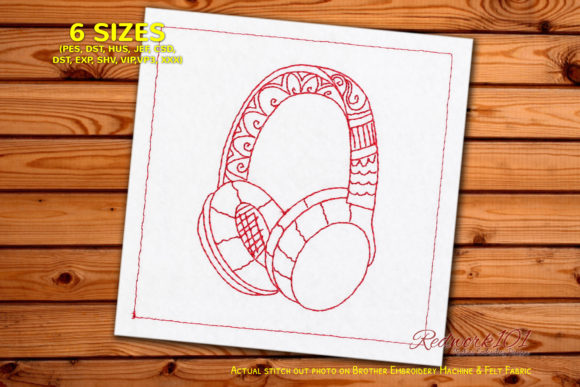
Designer Headphone Pattern Review for Real Projects
When I first opened the file for the Designer Headphone Pattern, my initial reaction wasn't about the stitch count or the technical specifications. It was about the vibe. In a market saturated with complex, multi-colored floral motifs and intricate monograms, this piece stands out because of its simplicity. It is a cool redwork embroidery design that immediately signals a modern touch to any fabric it touches. As someone who has spent years evaluating digital assets for both personal craft projects and commercial small business lines, I know that a great design isn't just about how it looks on a screen; it is about how it translates to thread, tension, and texture.
The visual personality of this embroidery project is clean and graphic. The shape of the headphones is instantly recognizable, creating an immediate connection with anyone who loves music. This makes it a perfect candidate for the Music category, but its utility extends far beyond just labeling a studio wall. The layout is balanced, offering a central focal point that works beautifully as a chest logo on custom apparel or a centered statement on a tote bag. The inclusion of an optional box stitch adds a layer of versatility, allowing you to frame the design if you prefer a more structured look, though the standalone silhouette is striking enough on its own.
From Screen to Stitch: A Real-World Scenario
To truly understand the potential of the Designer Headphone Pattern, let's imagine a specific scenario. Suppose you are preparing inventory for an upcoming holiday season. You have decided to create a line of limited-edition embroidered sweatshirts for a boutique client who specializes in tech-savvy youth culture. You need something that feels premium but approachable, something that screams "cool" without being cluttered.
This is where the design shines. I would recommend placing the Designer Headphone Pattern on the front left chest of a heavyweight cotton fleece hoodie. Because the design relies on outline work rather than heavy fill, it won't weigh down the soft fabric. When stitched, the clean lines will catch the light differently depending on the thread color chosen. If you use a metallic silver thread on a navy blue hoodie, the result is sophisticated. If you opt for a bright primary red on black fabric, it becomes a bold streetwear statement. The finished product feels intentional and professionally executed, which is crucial for maintaining customer trust and brand consistency in your shop.
I also envision this design on a canvas tote bag for a local coffee shop or a maker space. The sturdy fabric handles the stitching well, and the graphic nature of the headphones serves as a conversation starter. It transforms a generic bag into a branded asset that customers actually want to carry around. For an Etsy seller or a crafter selling handmade products, this level of visual appeal can significantly boost engagement. People stop scrolling when they see a clean, well-executed graphic that resonates with their interests.
Performance Across Different Fabrics and Products
The versatility of this machine embroidery design is one of its strongest selling points. However, not all fabrics behave the same way, and understanding these nuances is key to a successful outcome. The design features running stitches and satin elements that require careful consideration regarding thread colors and fabric texture.
For custom apparel like t-shirts and jackets, the design performs exceptionally well on stable knits and wovens. The redwork style means there is less density to worry about puckering, making it ideal for lighter weight materials. When working on sweatshirt embroidery, ensure you use a cutaway stabilizer to support the stretchy knit, preventing the design from distorting after washing. The optional outer box provides a nice boundary that can help anchor the design on larger garments like hoodies or jackets.
However, there are areas where caution is required. If you are planning to use this on a cap or hat, be mindful of the curved surface. While the simple lines of the Designer Headphone Pattern generally adapt well to curves, very small hoop sizes might struggle to capture the subtle angles of the ear cups and headband. Similarly, textured fabrics like bouclé or heavy corduroy can hide the fine details of the outline work. On such materials, the design might lose some of its crispness, so a test run on scrap fabric is non-negotiable.
Dark fabrics present another challenge. Redwork designs rely heavily on contrast. If you choose a thread color that is too close to the fabric background, the design will disappear. Always review your design in black and white mockups before stitching to ensure the contrast ratio is sufficient. For dark backgrounds, a lighter thread color is essential to make the embroidery file pop. Conversely, on light fabrics, darker threads provide a sharp, professional finish.
Practical Notes for Designers and Sellers
If you are a small business owner or a creative entrepreneur looking to incorporate this into your product line, there are several technical steps you must take to ensure quality. First, check the stitch density. Even though this is a redwork design, excessive density in the corners can cause thread breaks or needle deflection. Inspect the small details of the headphone band and ear cups to ensure they are legible at the intended size.
Stabilizer selection is equally critical. For embroidered patches or items that will undergo frequent washing, like aprons or kitchen towels, a high-quality tear-away or cutaway stabilizer will maintain the integrity of the design over time. Without proper stabilization, the finished product may look distorted or loose, which can negatively impact buyer engagement and lead to returns.
Another vital consideration is licensing. Before you start selling commercial embroidery items featuring the Designer Headphone Pattern, confirm the terms of use. Some digital products allow for unlimited commercial sales, while others restrict the number of units or prohibit certain types of merchandise. Ignoring these terms can lead to legal issues and damage your reputation as a Etsy seller or online store owner.
When creating printable mockups for your listings, focus on how the design interacts with the garment's natural folds. A flat image doesn't always convey the dimensionality of the stitching. Try to show the texture of the thread against the fabric to give potential buyers a realistic expectation of the handmade product. This transparency builds confidence and reduces the likelihood of dissatisfaction upon delivery.
Final Thoughts on Visual Appeal and Value
The Designer Headphone Pattern succeeds because it balances aesthetic appeal with practical usability. It creates a mood of modernity and creativity that fits perfectly into today's design landscape. Whether you are making personalized gifts for family members, crafting unique baby embroidery items, or building a robust catalog of design assets for your digital shop, this pattern offers a reliable foundation.
It elevates the perceived value of your work. A simple, well-stitched graphic often looks more expensive and polished than a complex, poorly executed one. By paying attention to thread contrast, fabric choice, and stabilization, you can turn this simple outline into a standout piece that customers love. It is a tool that empowers makers to create professional-grade goods without needing advanced technical skills, provided they respect the basics of machine embroidery.
In conclusion, if you are looking for a versatile, modern addition to your collection, the Designer Headphone Pattern is a strong contender. Just remember to test it thoroughly, respect the limitations of your materials, and always prioritize the final look of the finished product. With the right execution, this design can become a signature element in your portfolio, appealing to music lovers and fashion enthusiasts alike.